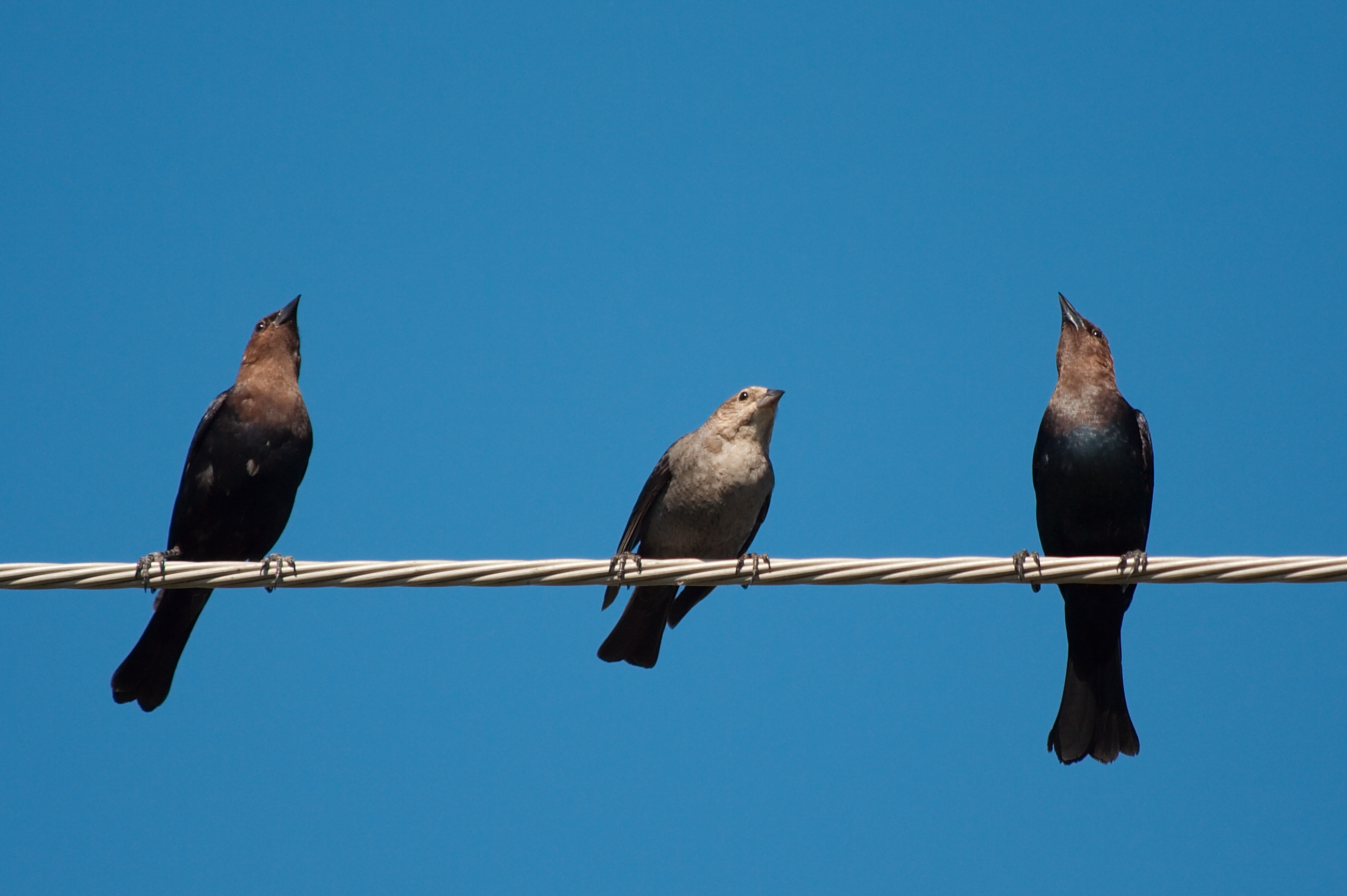
When we moved to the country in Wisconsin, we were fascinated by the number of birds we saw and had to identify. We only moved from the Chicago suburbs, after all, how different could they be? Maybe we just weren’t looking? One new bird for us was the brown-headed cowbird, and the below picture of these birds was taken in Urbana, IL:

Of course, Urbana is closer to the agricultural fields that cowbirds love and it’s no surprise we see them every summer in our new home. These birds have quite a notorious reputation. They are Wisconsin’s only native “brood parasite,” a term I’d never heard before. Evolution somehow taught brown-headed cowbirds the survival tactic of quantity over quality.
Females of the species don’t build nests or tend eggs at all. Instead, they’ll lay as many eggs as they can over the summer, all in the nests of other birds:

The heavily speckled eggs above are cowbird eggs, laid in the nest of a house finch. Nature can be rough. The host mom has limited resources and her own young might suffer or not make it. Some species do recognize the cowbird eggs and toss them out or puncture them or even build a new nest over the top to lay their own eggs in. That’s apparently not the norm, however. Cowbird survival relies on duping foster parents, and they are thriving in Wisconsin.
Cowbirds visit our feeder area regularly, although I’ve only taken lousy shots of them at the bird bath:

They’re a member of the blackbird family, foraging on the ground for seeds. Every time I see one, I feel conflicted. They can’t help the path evolution put them on for survival, but I feel bad for the songbirds who fall for their egg-laying trick and especially for the foster parent’s own young competing in the nest.
Still, it is what it is. When watching a nature documentary, most people root for the gazelle over the lion, but the lion has equal rights to survive. Like I said, nature can be rough.


Leave a Reply